Raised in Beijing and now based in New York, artist and illustrator Yuchen Lu creates images that move between memory, mythology, and the imagined. Drawing from Chinese visual traditions and stories that reach far beyond them, her work brings together flowering landscapes, ancient figures, and imagined worlds through delicate lines, vivid colors, and a distinctive sense of movement.
Her illustrations have been featured in Gucci's Blooming Shanghai art project and the Los Angeles Times, with additional commercial work for Omnicom Group. Recognized by the Society of Illustrators and shortlisted for the World Illustration Awards, Lu has exhibited internationally, including in New York and Shanghai.
Yet much of her work remains rooted in personal observation: the wild roses outside her childhood home, the changing seasons, and familiar places transformed by memory and distance. In conversation with Boroughs, Lu reflects on growing up in Beijing, building a life in New York, and how both cities continue to shape her understanding of art, identity, and home.
INTERVIEW
BOROUGHS: Before New York was even in the picture, who was Yuchen Lu in Beijing? Take us through your world back then. The neighborhoods, the places you spent your time, the people around you. What did everyday life look like?
YUCHEN LU: My childhood wasn't particularly unusual, just a normal childhood in a different cultural setting. Like many kids in China, I spent most of my childhood and teenage years at school, with plenty of extracurricular classes. The Chinese education system is very competitive.
At home, my father collected porcelain vases, traditional Chinese paintings, and calligraphy. He recognized my artistic talent and shared the stories behind these objects with me. He hoped I would continue our family's creative legacy.
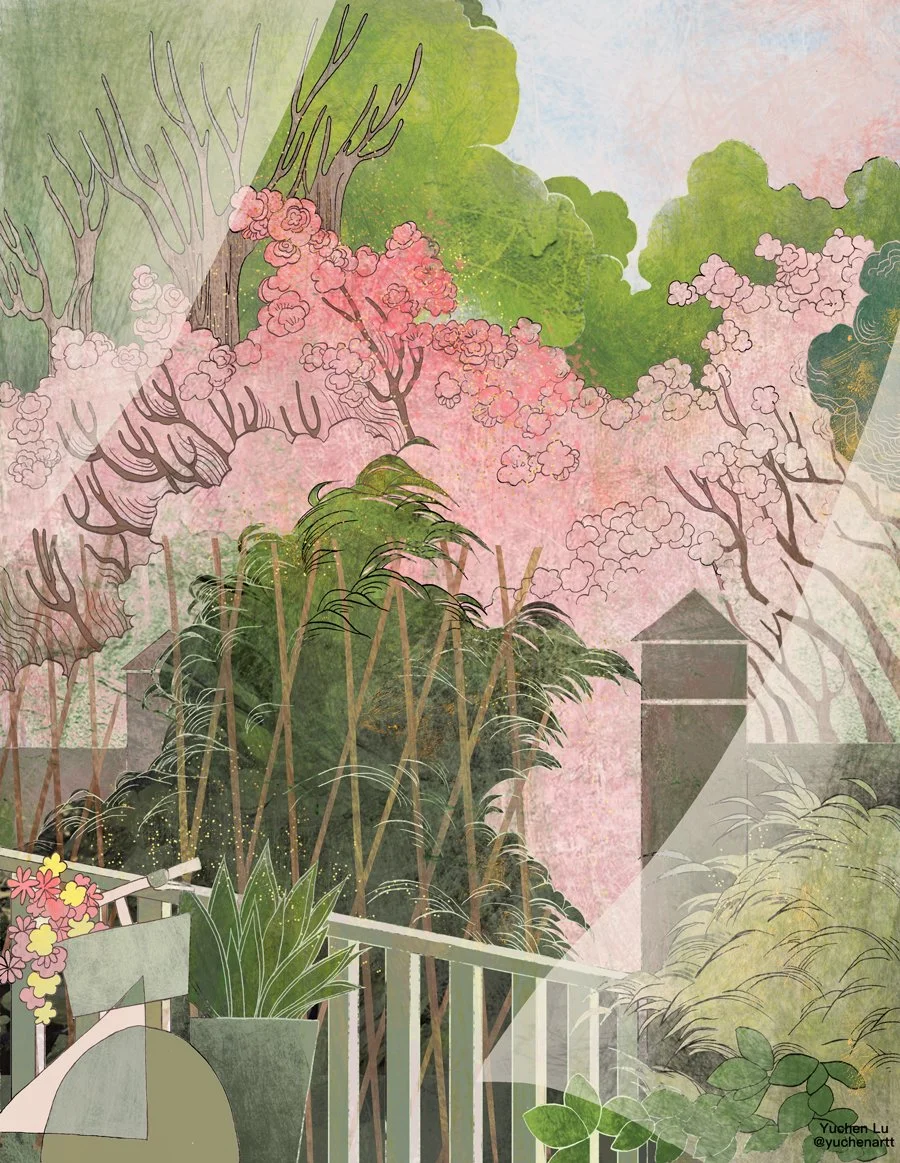
Yuchen Lu: APRIL 15
BOROUGHS: Let's talk about arriving in New York. What did you think you were walking into, and what did you actually find? Was there a moment when you realized the city was nothing like you'd imagined?
YUCHEN LU: I came to New York to study at the School of Visual Arts, and I had always known that I wanted to be an artist.
It was a difficult leap, adjusting to a different language, culture, and way of life. But in this city of constant arrival, I was one among many, each of us carrying our own dream.
I don't think there was one dramatic moment when everything changed. It happened gradually, through school, the people around me, and everyday life. Looking back, I see it more as a natural part of growing up and experiencing new things.
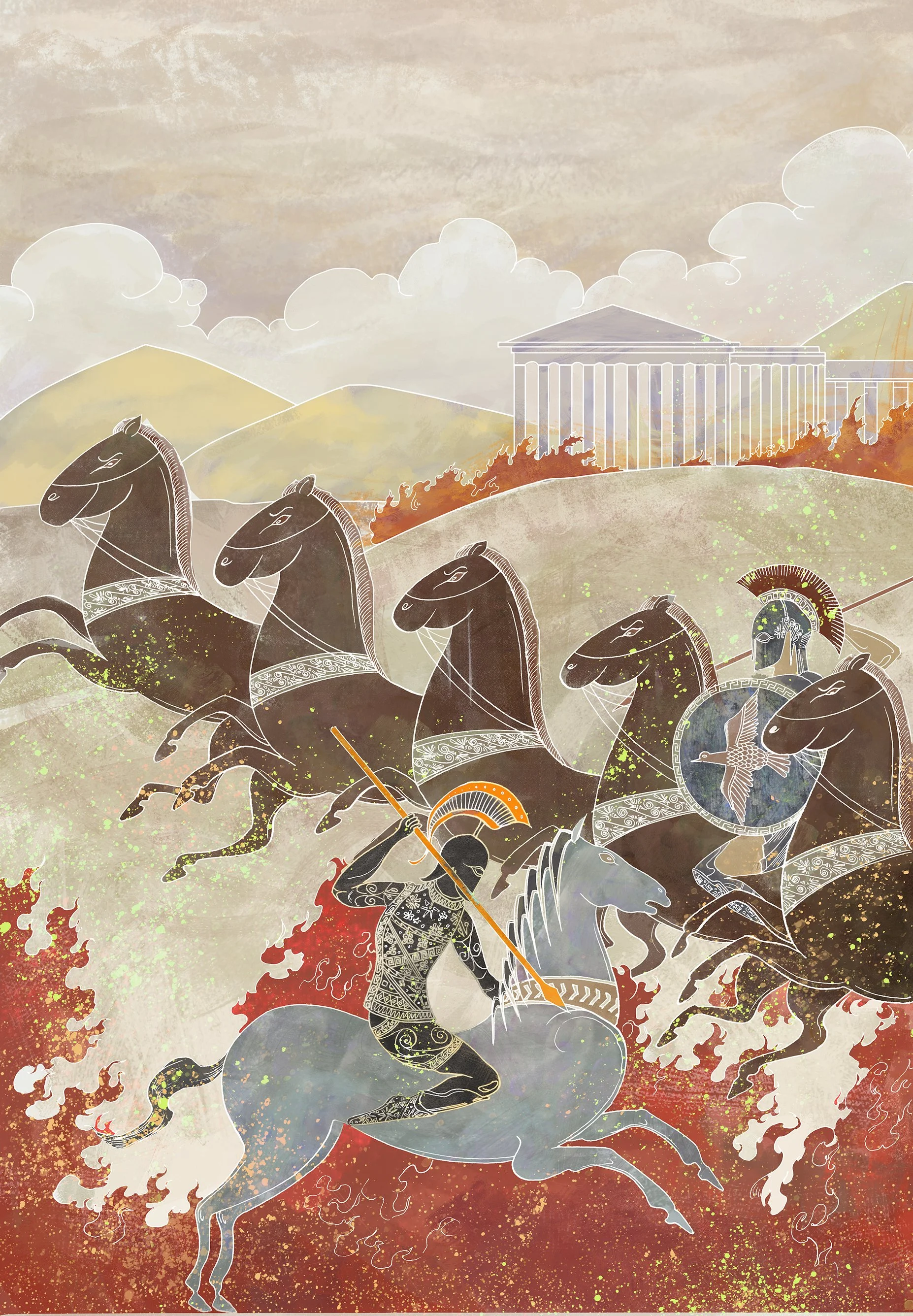
Yuchen Lu: THE BATTLE OF THEBES
BOROUGHS: When you're creating work inspired by a culture or mythology outside your own, you're not simply recreating what already exists. You're seeing it through your own eyes. What are you trying to communicate through your work? How much comes from the original stories and traditions, and how much comes from your own experiences and imagination? Is there a particular piece that captures that relationship?
YUCHEN LU: I think it's really about bringing my own interpretation into the way I create an image.
Colors, lines, shapes, and composition are all part of an artist's visual language. I don't think there's a fixed proportion between the original story and my imagination. What interests me is how a familiar story can feel different through those choices.
For me, it's not about completely reinventing or overturning the original story. It's about letting people recognize something familiar while discovering something new within it.
I recently created a piece featuring a tiger for Tibet, and I really like how it turned out.
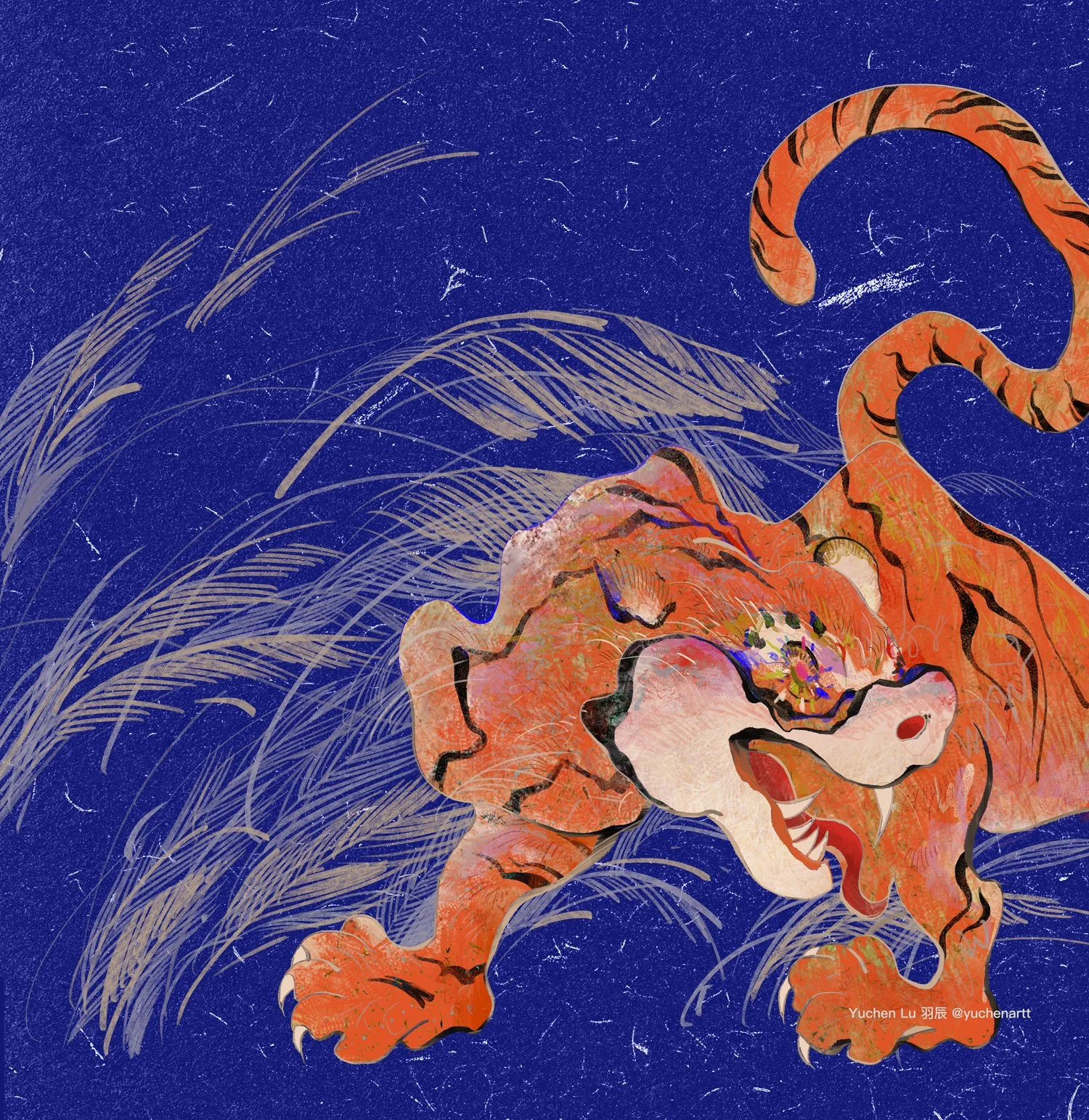
Yuchen Lu: TIGER
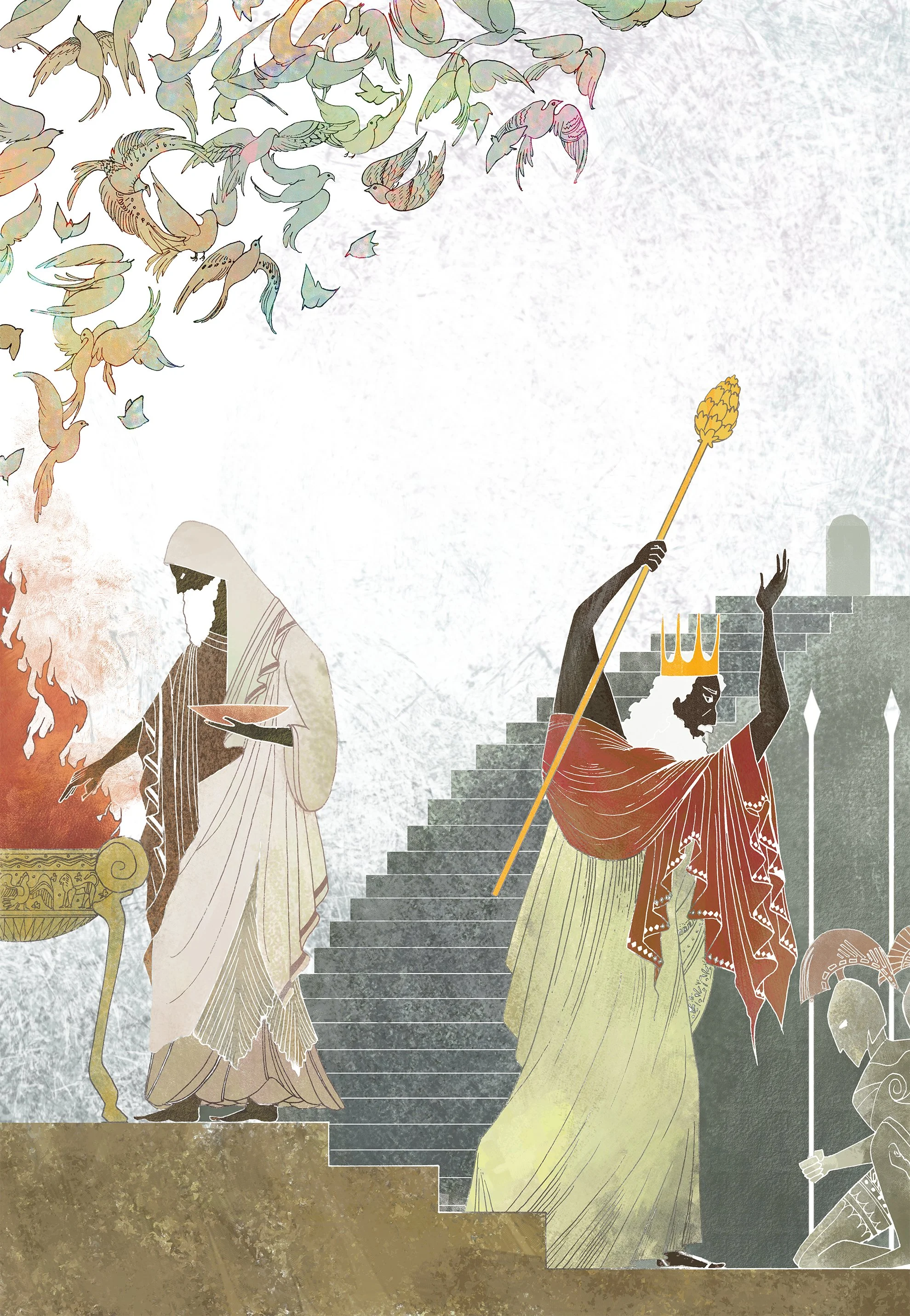
Yuchen Lu: THE ORACLE
BOROUGHS: Sometimes leaving a place changes how we see it more than living there ever did. When you think about Beijing now, what comes to mind? Has New York changed your relationship with the city you grew up in?
YUCHEN LU: Whenever I travel between Beijing and New York, it almost feels like loading a different saved file in a video game.
When I'm back in Beijing, my life in New York feels strangely distant. And when I return to New York, the same thing happens in reverse.
Chinatown has also made me look at familiar things differently. Growing up in Beijing, I'd never seen Chinese culture presented quite that way, so familiar and yet distant.
I wouldn't say distance has made my sense of home any clearer. If anything, it's made the idea of home a little harder to define.
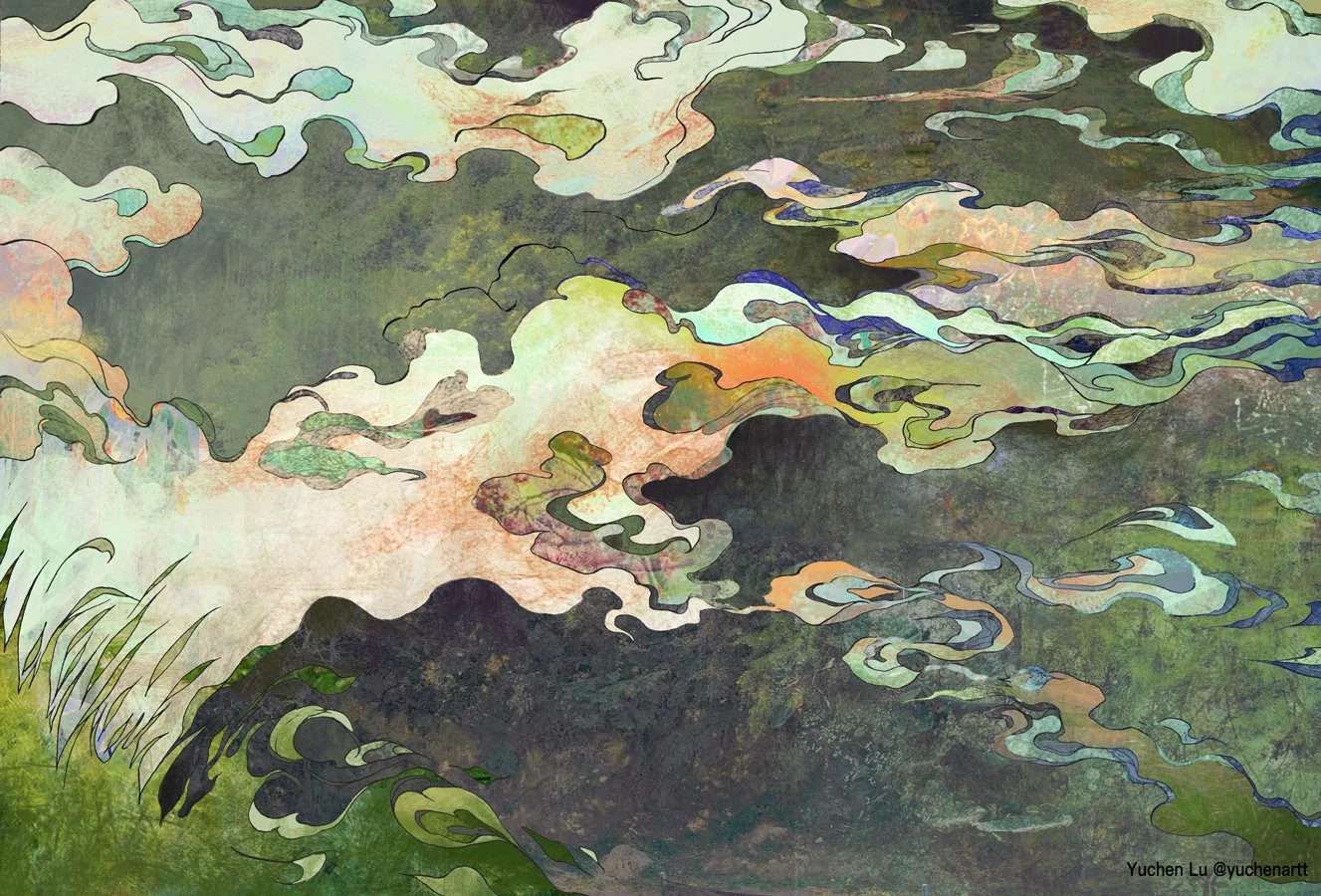
Yuchen Lu: JUNE 30
BOROUGHS: Every city leaves something on the people who grow up there. What did Beijing leave on you? Are there things you saw or experienced growing up that still find their way into your work today?
YUCHEN LU: That's actually a difficult question. Some artists draw inspiration from the world around them, such as landscapes, relationships, or everyday life, while others are more inspired by their inner worlds: imagination, dreams, or things they encounter in books and films.
I suppose you could probably tell from my work that I'm an Asian artist, but it would be difficult to tell which part of China I'm from. I don't depict many specific places or landscapes. Instead, my work contains more mythology, dreams, and imaginary worlds.
But I do love having four distinct seasons, and that definitely shows up in my work. There are ginkgo trees, winter scenes, and sometimes a certain feeling of coldness. Maybe you could guess that I'm from a northern city?
I'm actually quite curious about that myself: how much can viewers tell about where an artist comes from just by looking at their work?
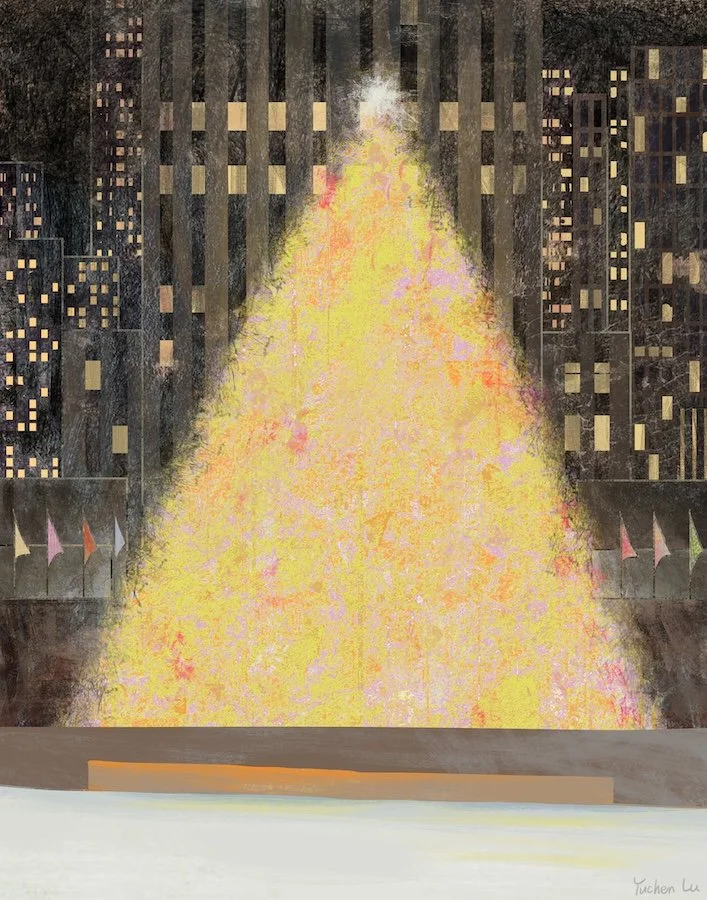
Yuchen Lu: CHRISTMAS IN NEW YORK
BOROUGHS: Your work takes us into some very different worlds: Greek mythology and tragedy, African cultures and women, traditional Chinese imagery. You're clearly looking far beyond your own cultural background for inspiration. Growing up in Beijing, where did that curiosity begin? What first pulled you toward these other worlds, and what is it about their stories, people, or histories that keeps drawing you in?
YUCHEN LU: I grew up in a cultural environment quite different from the West. Many of the stories I encountered as a child came from Chinese mythology, with characters like Nüwa (女娲), Pangu (盘古), and Nezha (哪吒).
Productions by the Shanghai Animation Film Studio and Chinese illustrated storybooks, especially those from the 1980s, were a big part of my childhood.
At the same time, we were introduced to Western literature at school, including the Brothers Grimm, Hans Christian Andersen, and Russian literature.
I was fascinated by the illustrations and beautiful imagery in animated films, the colorful, magical worlds, and especially the delicate lines and flowing figures. There's an authentic quality to that imagery that I don't think today's AI technology can reproduce.
I've always been interested in different cultures and people's stories, and I think art is a wonderful bridge that connects us across different backgrounds and experiences.
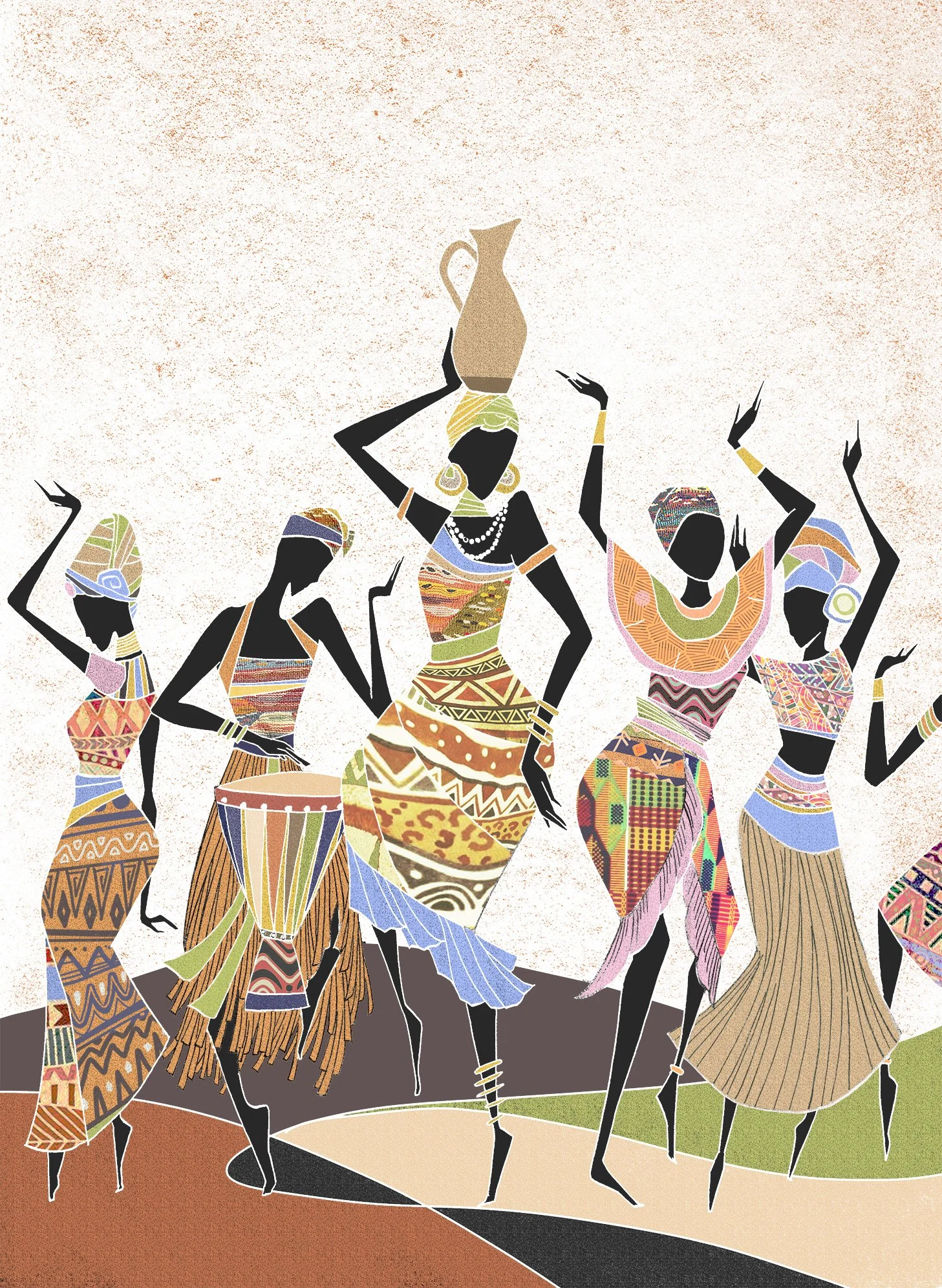
Yuchen Lu: AFRICA
BOROUGHS: If we put a piece of your work from your Beijing years beside something you've created recently in New York, what would we see? Has your work changed, or are you still chasing some of the same ideas you were back then?
YUCHEN LU: When I was a student, my work was much more about learning from artists I admired, including Golden Age art from the late nineteenth century and Chinese picture books from the 1980s. I tried to bring some of their qualities into my own drawings.
After moving to New York and gradually beginning to work professionally, I started thinking more about what I wanted to express, but also about what my clients wanted to communicate.
My work has become more commercially oriented and less about pursuing a particular aesthetic for its own sake.
I think I've shifted from simply making images I find beautiful to making images that have a purpose and connect with other people.
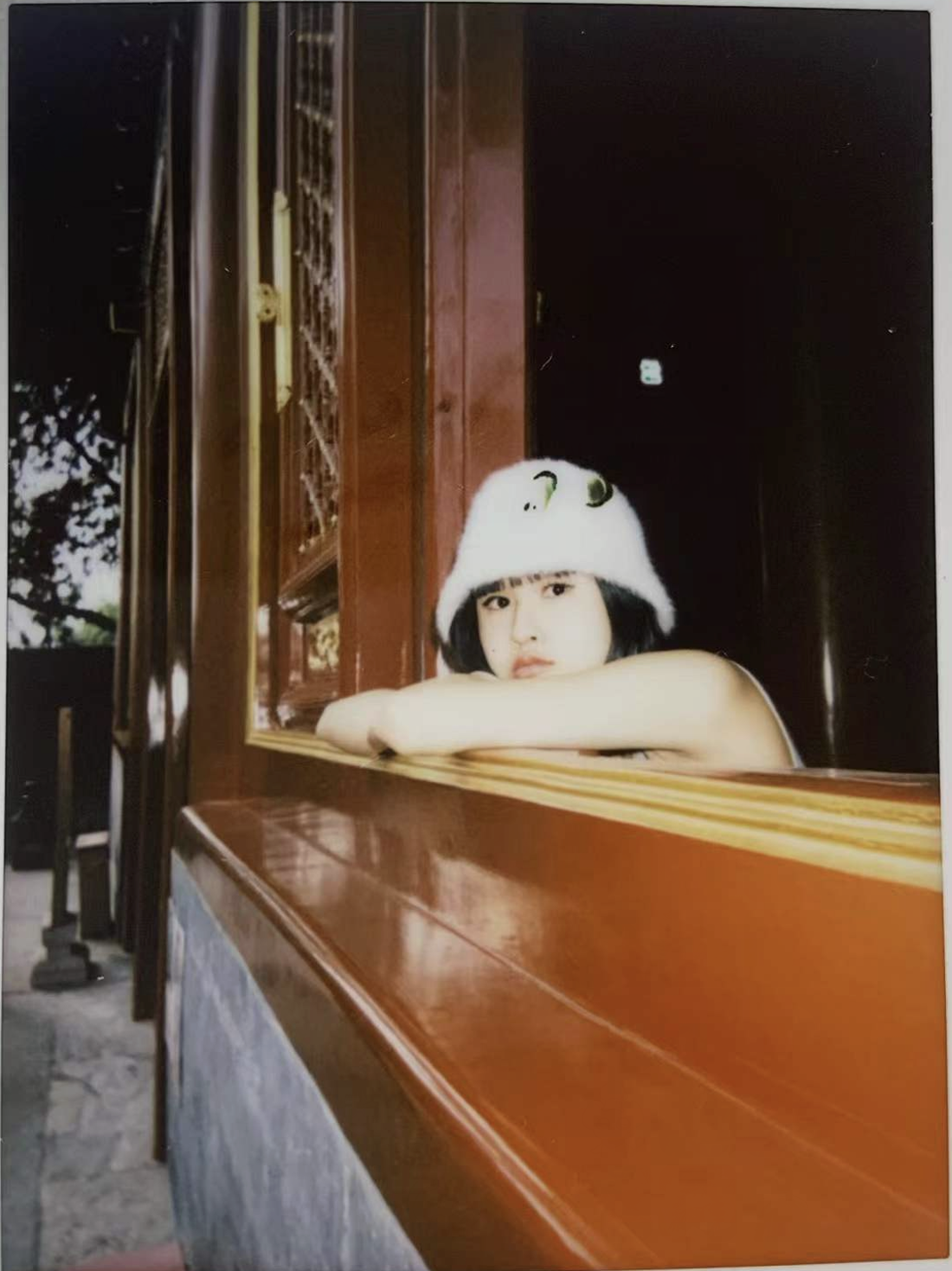
BOROUGHS: If you could take us to one place in Beijing and one place in New York that tell us something about who you are, where would we go, and what would we find there?
YUCHEN LU: In Beijing, probably the Shichahai (什刹海) area, around Houhai (后海) and Nanluoguxiang (南锣鼓巷).
It's quite touristy and commercialized now, but I still love the scenery and atmosphere. I've been visiting those streets since middle school. In winter, the lakes freeze over, and people go out onto the ice on traditional ice sleds.
That area is very characteristic of Beijing, both its history and atmosphere.
In New York, probably Flatiron and Madison Square Park around 23rd Street. It's where I spent my college years, and I still go there quite often. It's one of the areas I know best.
I love people-watching there, enjoying a quiet moment at night in the middle of such a busy city.
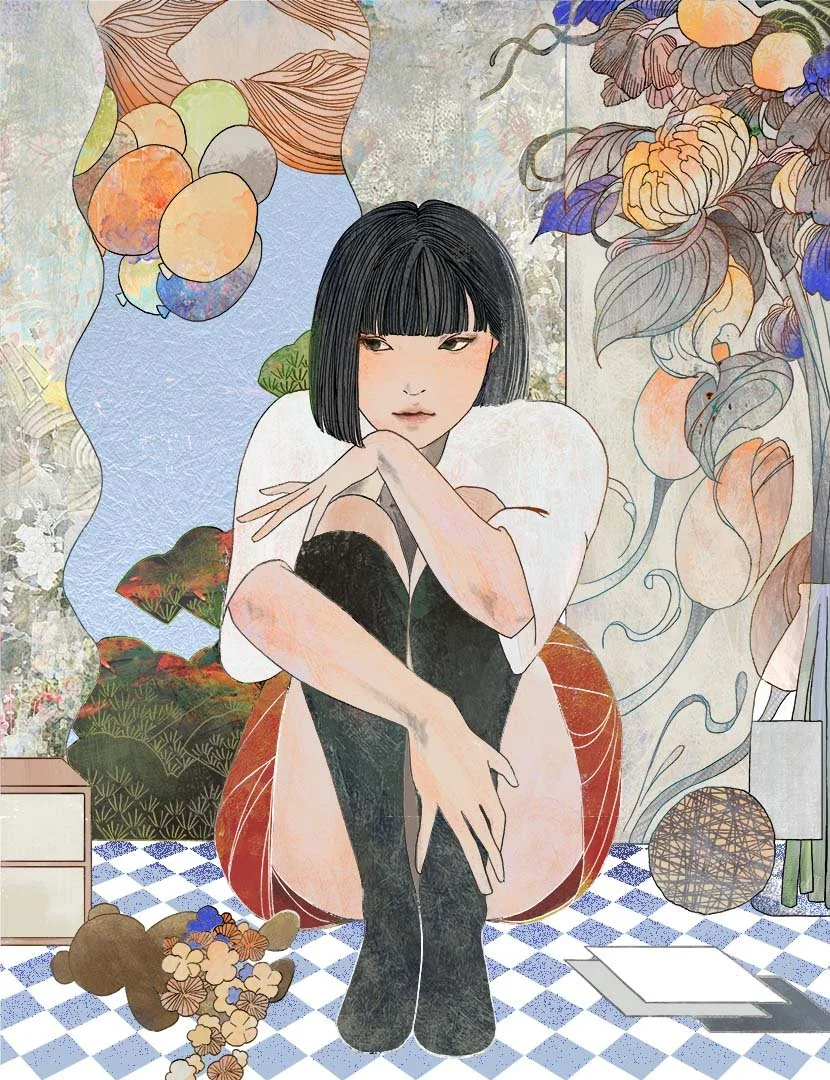
Yuchen Lu: 窗外